There's a lot of content out there explaining what interior styling is, mood boards, textures, that whole "curating a feeling" pitch. Almost none of it explains what actually gets you hired. Employers aren't screening for your Pinterest aesthetic.
They're screening for something narrower, and honestly more practical, than most beginners expect. If you've been wondering why your styling eye feels solid but your job search doesn't, this is probably why. Let's get into what employers in India are actually checking for when an interior stylist application lands on their desk.
What Interior Stylist Roles Look Like in India
"Interior stylist" isn't one job, it's really three different tracks, and knowing which one you're aiming for changes what you should be building right now.
Employed roles sit inside design studios, furniture brands, or home decor retailers. Think Skipper Furnishings, boutique studios, or showroom consultant-stylist hybrid roles, salaries often start modest (₹20,000–25,000/month at entry level), but there's structure, mentorship, and a steady project pipeline.
Freelance styling is where a lot of experienced stylists eventually land, taking on residential shoots, real estate staging, or short-term brand projects on a per-project basis. It pays unevenly at first but scales well once you have a name and a network.
Brand and e-commerce styling is the newer, fast-growing lane, styling product shots for furniture and home decor brands, catalog shoots, Instagram content for lifestyle brands. This overlaps heavily with photography-adjacent work, and it's where a lot of fresh graduates are actually finding entry points right now, since brands need constant content and don't always require years of experience, just a sharp eye and reliable turnaround.
Most stylists don't pick one lane forever. A common path looks like: brand/e-commerce styling to build a portfolio fast, then a move into employed studio work, then eventually freelance once the network's strong enough to sustain it.
Also Read : How to Become an Interior Stylist in India
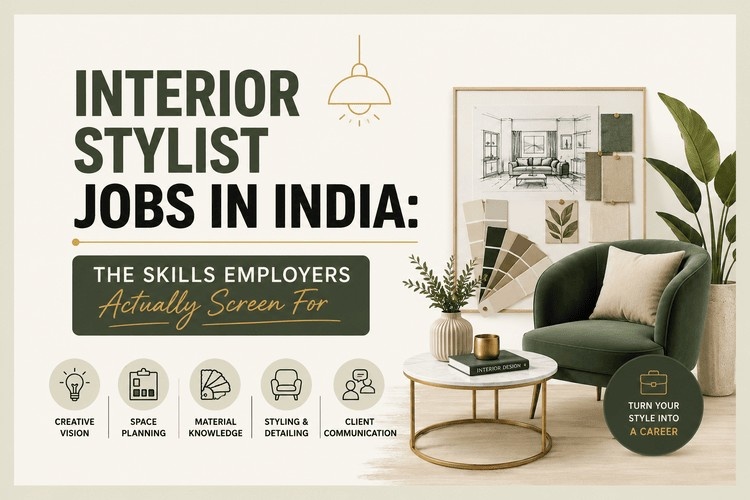
Skills Employers Screen For First
Here's the part nobody tells you clearly enough: employers aren't evaluating your creativity in the abstract. They're checking four specific things, roughly in this order.
Portfolio quality, but a specific kind: Not "pretty rooms." They want to see process, before-and-after documentation, a sense of how you approached a space, not just the final glossy shot. A portfolio full of only finished hero images actually raises questions rather than answering them, it looks like you didn't do the styling, or worse, that you're passing off inspiration images as your own work.
Styling-for-photography specifically: This trips up a lot of candidates who are genuinely good at styling a room to live in, but have never styled a room to be photographed. Camera angles change what "balanced" means. Props that look fine in person can clutter a frame. If you've never worked alongside a photographer or shot your own styling with intention, that gap shows up fast in interviews and trial shoots.
Client and vendor communication: Styling isn't solitary work. You're constantly translating a brief, or a brand's vague "make it feel warm and elevated" ask, into actual sourced pieces, and often negotiating with vendors on timelines and budgets simultaneously. Employers ask about this directly, because a stylist who can't communicate clearly becomes a liability on a live shoot day, not just a hiring risk.
Turnaround speed: Brand and e-commerce styling in particular runs on tight production schedules. Being asked "how long would this styling take you" in an interview isn't a throwaway question, it's a genuine screen for whether you understand production reality versus academic project timelines, where you might've had two weeks for a single room.
Build the skills employers value with Kaarwan's Advanced Interior Design Certification Course. Gain hands-on projects, expert mentorship, and a job-ready portfolio to launch your interior styling career.
How to Build a Portfolio Without Paid Work
The catch-22 every beginner hits: you need a portfolio to get hired, but you need work to build a portfolio. Here's how stylists actually break that cycle in India right now.
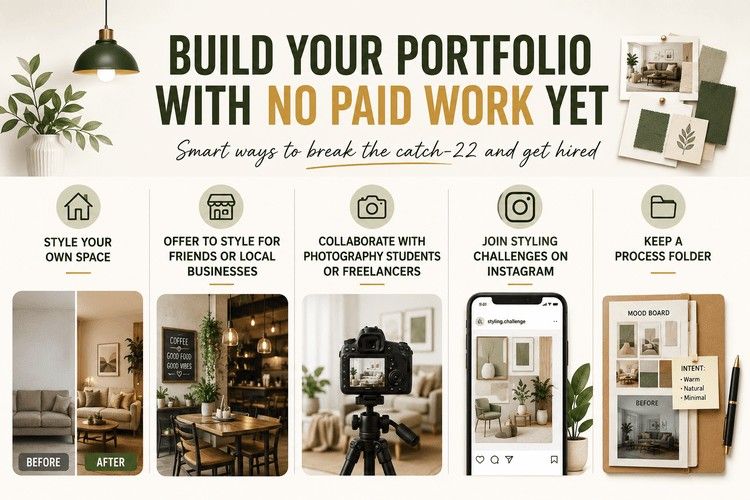
Style your own space, properly, not casually: Document it like a real shoot, multiple angles, before-and-after, a short write-up of your intent and choices. One well-documented room beats five half-finished ones.
Offer to style for a friend's home shoot or a small local business: A café, a boutique salon, even a friend's Instagram-selling home decor page, these are lower-stakes environments where you can practice styling-for-camera specifically, which is exactly the skill gap mentioned above.
Collaborate with photography students or freelancers: Photography students need styled subjects just as much as you need photographed work. This kind of trade, your styling for their shots, is one of the fastest ways to build a genuinely photographic portfolio rather than phone snapshots.
Enter or follow styling challenges on Instagram: Not for validation, but because recreating a brief within a deadline is literally the skill you're trying to prove you have.
Keep a process folder, not just final images: Screenshots of mood boards, notes on why you chose specific pieces, even the messier "before" shots. When an employer asks how you think, this is what actually answers that question, not just a polished final photo.
Common Hiring Mistakes Candidates Make
A few patterns show up again and again, and they're worth naming plainly because most guides skip this part entirely.
Leading with aesthetics-only portfolios: Gorgeous final shots with zero context read as inspiration boards, not proof of skill. Employers want to see your fingerprints on the process, not just a beautiful end result you might have simply admired and reposted.
Underestimating the business side: Vendor negotiation, budget tracking, deadline management, these aren't "extra" skills, they're core to the job. Candidates who only talk about their creative process in interviews, without ever mentioning how they'd manage a budget or a vendor delay, come across as unprepared for the actual day-to-day.
Applying broadly without tailoring: A portfolio built for residential home styling doesn't automatically translate to a brand e-commerce styling role, the visual language is genuinely different. Sending the same generic portfolio to every kind of opening signals you haven't thought about what the specific role actually needs.
Treating software skills as optional: Basic proficiency in tools like AutoCAD or at least strong visual presentation software is increasingly expected, even for styling-focused roles, since stylists often work adjacent to design teams who do use these tools daily.
Undervaluing communication in interviews: Candidates over-prepare their "design philosophy" speech and under-prepare for practical questions like "how would you handle a client who hates your first three options." That second kind of question is what actually gets asked.
Also Read : Interior Styling Lessons We Can All Steal from K-Dramas
Is Formal Training Worth It for Job-Readiness?
Short answer: it depends heavily on what gap you're actually trying to close.
If you already have a strong natural eye and just need the portfolio-building and industry-exposure piece, a structured, project-based program tends to close that gap faster than years of informal trial and error. What formal training genuinely helps with: structured feedback on your process (not just your final output), exposure to real briefs and deadlines rather than open-ended personal projects, and, critically, a peer and mentor network that often becomes your first source of paid work.
What it doesn't replace: the actual hustle of building client relationships and a body of real, photographed work. No course hands you that, it's built through the practical steps above, alongside whatever structured learning you invest in.
Interior Stylist Salary Expectations in India
Numbers vary a fair bit depending on source and city, so here's a realistic range pulled from multiple current job-market data points.
Entry-level (0–2 years): Roughly ₹2.5–5 LPA, according to AmbitionBox and Glassdoor listings, with monthly entry roles (like showroom or brand-assistant stylist positions) often starting around ₹20,000–25,000/month.
Mid-level (3–5 years): ₹6–10 LPA, once you're managing shoots independently and have a client or brand roster.
Senior/freelance: ₹12–20 LPA equivalent for stylists working with premium residential clients or established hospitality brands, though freelance income here is genuinely project-based and lumpier, some months light, some heavy.
Naukri and Glassdoor listings for pure "interior stylist" titles remain relatively sparse in India compared to "interior designer" roles, worth knowing going in, a lot of styling-specific income actually comes through freelance and brand-project work rather than a single steady salaried title.
Turn your creativity into a career with Kaarwan's Advanced Interior Design Certification Course. Build industry-ready skills, real projects, and a portfolio employers actually want to see.
Conclusion
The gap between "I have a good eye" and "I got hired" usually comes down to process documentation, photography-specific styling skill, and being able to talk business, not just aesthetics, in an interview. Employers aren't looking for perfection, they're looking for proof you understand how the job actually works day to day. Build that proof deliberately, and the roles open up faster than you'd think.
Ready to close the gap? Explore Kaarwan's interior styling and design masterclasses and start building a portfolio that actually gets you hired.
FAQs
Is interior stylist a real full-time job title in India?
Yes, though it's less common as a standalone salaried title compared to "interior designer." Most full-time styling work sits inside brand, retail, or studio roles, with a genuine freelance market growing fast alongside it.
Interior Stylist vs Interior Designer Job — Which Should I Target?
Interior design roles involve layout, technical drawings, and construction coordination, a broader, more technical scope. Styling is narrower and more visual/curatorial, focused on furnishing, props, and photography-ready finishing. If you're deciding between the two, it helps to look at the complete career path breakdown before committing to a training direction.
Do I need a design degree to become an interior stylist?
Not necessarily. A strong portfolio and demonstrated styling-for-photography skill often matter more than a formal degree, though structured training can accelerate how fast you build both.
How fast can I build a hireable portfolio from zero?
With consistent, deliberate effort, styling your own space, collaborating with photographers, documenting process, most people can build a credible starter portfolio in 2–3 months.